Book a Discovery Call
×
Login Register

AI+ Audio™

  • Empower Audio Innovation with AI: Creative, Practical, Transformative
  • Beginner-Friendly Learning: Perfect for newcomers eager to explore AI-powered audio, covering essential concepts with ease
  • Comprehensive Skill Building: Includes speech processing, sound enhancement, voice synthesis, and real-world audio AI applications
  • Industry-Ready Expertise: Understand how AI is reshaping music, media, entertainment, and communication sectors
  • Hands-On Direction: Provides practical frameworks and guided exercises to help you create, analyse, and optimise audio using AI
Enroll Now
AI+ Audio™
Self-Paced Online
USD $ 195.00
Instructor-Led Online
USD $ 1110.00

At a Glance: Course + Exam Overview

Our training approach is human‑centred and outcomes‑driven. We focus on what learners can apply confidently.

Category
AI Design & Creative
AI Professional
All Courses
Audio Engineer / Sound Designer
English
Language
Program Name
AI+ Audio™
Duration
  • Instructor‑Led: 1 Day
  • Self‑Paced: 8 Hours of content
Prerequisites
    • Basic programming knowledge – Familiarity with Python or similar languages.
    • Understanding of audio signal processing – Know fundamental audio manipulation techniques.
    • Machine learning fundamentals – Basic knowledge of algorithms and model training.
    • Mathematical proficiency – Comfort with linear algebra and probability concepts.
    • Experience with audio software tools – Hands-on use of DAWs or similar tools.
Exam Format
Exam details not available.

What You'll Learn

AI-Powered Sound Creation

Learn to use AI tools for music composition, sound synthesis, and real-time audio generation.

Audio Intelligence and Recognition

Develop skills in speech recognition, sound tagging, and classification through machine learning models.

Generative and Adaptive Audio

Explore how AI creates dynamic soundscapes that adapt to user interactions and environments.

AI-Driven Production Techniques

Gain hands-on experience with AI tools for mixing, mastering, restoration, and audio enhancement.

Ethical and Industry Applications

Understand how AI transforms audio innovation across music, media, and entertainment while ensuring responsible creative use.
Certification Modules

Module 1: Introduction to AI and Sound

  1. 1.1 What is AI?
  2. 1.2 AI in Daily Life: Audio Examples
  3. 1.3 Basics of Sound Waves, Amplitude, Frequency
  4. 1.4 Digital Audio Fundamentals

Module 2: Harnessing AI Across Audio Domains

  1. 2.1 AI for Audio Enhancement and Restoration
  2. 2.2 AI for Audio Accessibility and Personalization
  3. 2.3 AI in Speech and Voice Technologies
  4. 2.4 Popular Audio Libraries: Librosa, PyAudio
  5. 2.5 Use Case:AI-Driven Real-Time Captioning and Translation for Live Events
  6. 2.6 Case Study:Personalized Hearing Aid Adaptation Using AI and Smart Earbuds
  7. 2.7 Hands-on: Voice Emotion Detection using Deepgram’s Voice AI Platform

Module 3: Machine Learning & AI for Audio

  1. 3.1 Machine Learning Models for Audio Applications
  2. 3.2 Deep Learning & Advanced AI Techniques for Audio
  3. 3.3 Audio-Specific Architectures: CNNs, RNNs, Transformers
  4. 3.4 Transfer Learning in Audio AI
  5. 3.5 Use Case: Speech-to-Text Transcription for Medical Records
  6. 3.6 Case Study: AI-powered Music Generation with Deep Learning
  7. 3.7 Hands-on: Build a Speech-to-Text Model Using TensorFlow

Module 4: Speech Recognition & Text-to-Speech

  1. 4.1 Fundamentals of Speech Recognition & Phonetics
  2. 4.2 API-based ASR Solutions
  3. 4.3 Building Custom ASR Models with Transformers
  4. 4.4 Introduction to TTS & Voice Cloning
  5. 4.5 Use Case: Automating Meeting Transcriptions with Google Speech-to-Text API
  6. 4.6 Case Study: Custom Transformer-based ASR Model for Multilingual Customer Support
  7. 4.7 Hands-on: Transcribe audio with an ASR API; generate speech from text

Module 5: Audio Enhancement & Noise Reduction

  1. 5.1 Common Audio Issues
  2. 5.2 AI-based Noise Filtering & Enhancement
  3. 5.3 Use Cases: Enhancing Audio Quality for Remote Work Calls Using AI Noise Reduction
  4. 5.4 Case Study: Krisp’s AI-powered Noise Cancellation in Podcast Production
  5. 5.5 Hands-on: Use Krisp or Adobe Enhance Speech to clean noisy audio

Module 6: Emotion & Sentiment Detection from Audio

  1. 6.1 Introduction to Emotion Detection
  2. 6.2 AI Models for Emotion Detection: RNNs, LSTMs, CNNs
  3. 6.3 Challenges: Bias, Multilingual Contexts, Reliability
  4. 6.4 Use Case: Enhancing Customer Service with Emotion Detection from Speech
  5. 6.5 Case Study: IBM Watson Tone Analyzer for Real-Time Emotion Recognition
  6. 6.6 Hands-on: Use IBM Watson Tone Analyzer or similar APIs to analyze speech samples

Module 7: Ethical and Privacy Considerations

  1. 7.1 Deepfakes and Voice Cloning Risks
  2. 7.2 Privacy and Data Security
  3. 7.3 Bias and Fairness in Audio AI
  4. 7.4 Use Case: Implementing Ethical Voice Data Collection and Consent Management
  5. 7.5 Case Study: Addressing Bias and Privacy in Audio AI under GDPR Compliance
  6. 7.6 Hands-on: Detect fake audio clips; create an ethical AI checklist

Module 8: Advanced Applications & Future Trends

  1. 8.1 Sound Event Detection & Classification
  2. 8.2 Audio Search and Indexing
  3. 8.3 Innovations: Multimodal AI, Edge Computing, 3D Audio
  4. 8.4 Emerging Careers in Audio AI

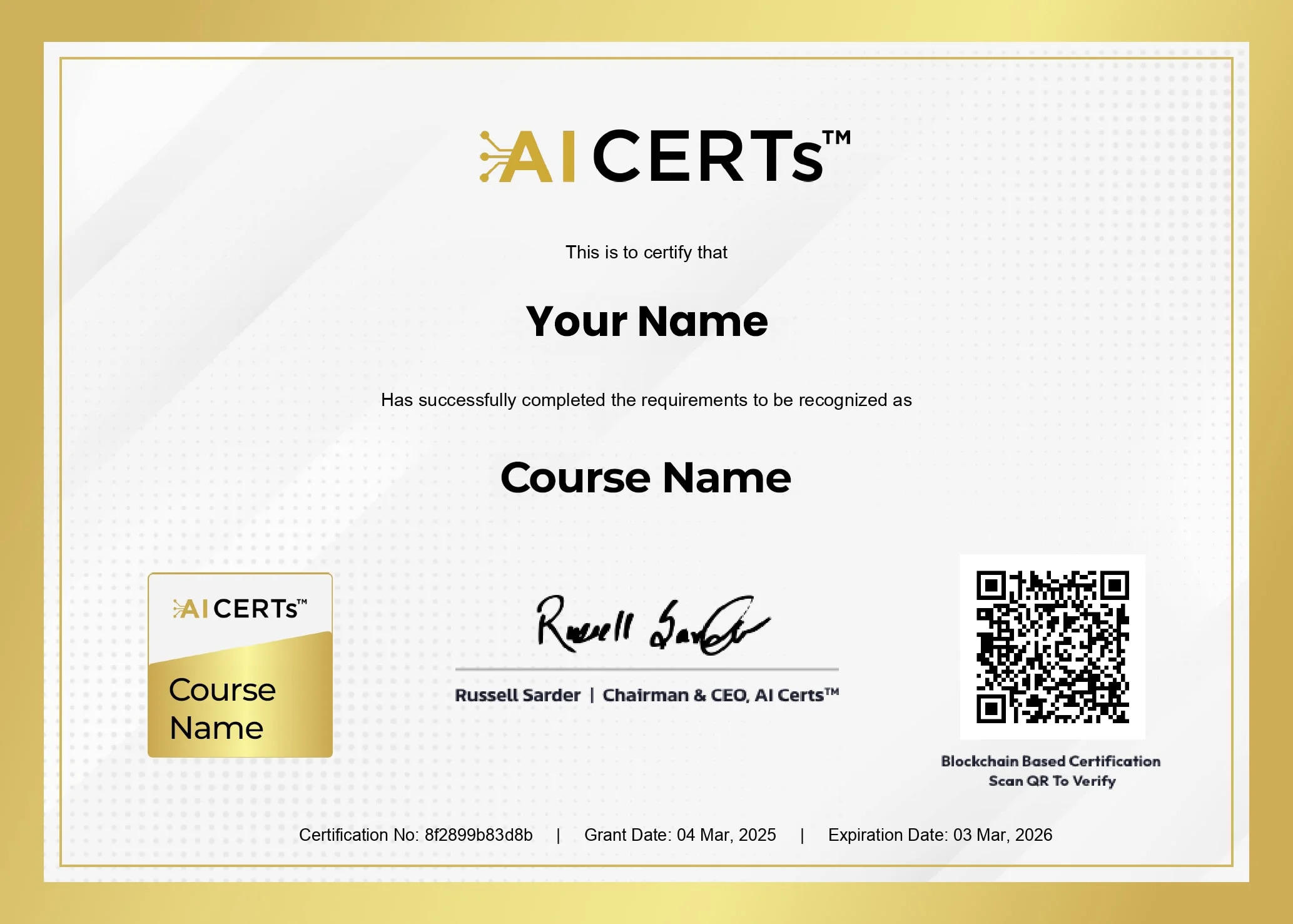
Finish the course and get certified

certificate

Industry Opportunities

Opportunity Image

AI Audio Engineer

Develop intelligent sound systems that adapt to user environments, enhance audio quality, and create dynamic, immersive listening experiences across platforms.

Opportunity Image

Audio Data Scientist

Analyze sound data to build predictive models for music recommendation, voice recognition, and personalized audio experiences.

Opportunity Image

AI Sound Designer

Design AI-driven soundscapes, automate mixing and mastering processes, and generate adaptive audio for games, films, and virtual environments.

Opportunity Image

Audio Technology Manager

Lead the integration of AI tools in music production, post-processing, and sound engineering to streamline workflows and boost creative output.

Opportunity Image

Chief Audio Innovation Officer (CAIO)

Drive AI transformation in the audio industry by championing intelligent sound design, personalized listening technologies, and next-generation auditory innovation.

Frequently Asked Questions

Can I apply what I learn in this course to real-world scenarios immediately?
Yes, you’ll gain hands-on experience with AI tools for music creation, sound design, and speech recognition that can be immediately applied across industries like music production, entertainment, and media technology.
What makes this course different from other Audio and AI courses?
This course uniquely blends AI with audio engineering, focusing on generative music, intelligent sound processing, and adaptive audio systems that redefine how sound is created, customized, and experienced.
What type of projects will I work on?
You’ll work on projects like AI-generated music composition, real-time sound enhancement, intelligent voice synthesis, and a capstone project focused on building an AI-powered audio application or tool.
How is the course structured to ensure I actually learn the skills?
The course combines foundational theory with interactive labs, practical assignments, and real-world projects that help you apply AI in sound processing, production, and intelligent audio design.
How does this course prepare me for the job market?
You’ll develop specialized AI and audio technology skills that prepare you for roles such as AI Audio Engineer, Sound Designer, Audio Data Scientist, or Speech Processing Specialist in music, gaming, and media industries.

Prerequisites

  • Basic programming knowledge – Familiarity with Python or similar languages.
  • Understanding of audio signal processing – Know fundamental audio manipulation techniques.
  • Machine learning fundamentals – Basic knowledge of algorithms and model training.
  • Mathematical proficiency – Comfort with linear algebra and probability concepts.
  • Experience with audio software tools – Hands-on use of DAWs or similar tools.

Exam Details

Passing Score

70%

Format

50 multiple-choice/multiple-response questions

Exam Blueprint

Introduction to AI and Sound 7%
Harnessing AI Across Audio Domains 15%
Machine Learning & AI for Audio 15%
Speech Recognition & Text-to-Speech 15%
Audio Enhancement & Noise Reduction 12%
Emotion & Sentiment Detection from Audio 12%
Ethical and Privacy Considerations 12%
Advanced Applications and Future Trends 12%
Self-Paced Online

Self-Paced: 8 hours of content

USD $ 195.00
Purchase Self-Paced Course
Instructor-Led Online

Instructor-Led: 1 day (live or virtual)

USD $ 1110.00
Purchase Instructor-Led Course

Core AI Tools Covered

TensorFlow Audio Recognition

TensorFlow Audio Recognition

PyTorch Sound Classification

PyTorch Sound Classification

Librosa

Librosa

OpenAI Jukebox

OpenAI Jukebox

Google Magenta Studio
Google Magenta Studio

Audacity AI Plugins

Audacity AI Plugins

Adobe Podcast AI Tools

Adobe Podcast AI Tools

AIVA

AIVA

Wav2Vec

Wav2Vec

SpeechBrain

SpeechBrain

JUCE Framework

JUCE Framework

FL Studio with AI Integrations
FL Studio with AI Integrations

Logic Pro Smart Tools

Logic Pro Smart Tools

Sonible Smart EQ

Sonible Smart EQ

Spotify Audio Analysis API
Spotify Audio Analysis API

NVIDIA Riva Speech SDK

NVIDIA Riva Speech SDK

Deep Learning for Audio Toolkit
Deep Learning for Audio Toolkit

AudioLDM

AudioLDM

Sound Design Automation Tools

Sound Design Automation Tools