AI-Driven Threat Detection
Learners will gain expertise in using AI algorithms for detecting various cybersecurity threats, including email threats, malware, and network anomalies, enhancing security monitoring capabilities.
Transform your security knowledge with our AI+ Security Level 2™ course and exam bundle. Learn essential AI-driven security strategies and safeguard next-gen technologies.
Our training approach is human‑centred and outcomes‑driven. We focus on what learners can apply confidently.
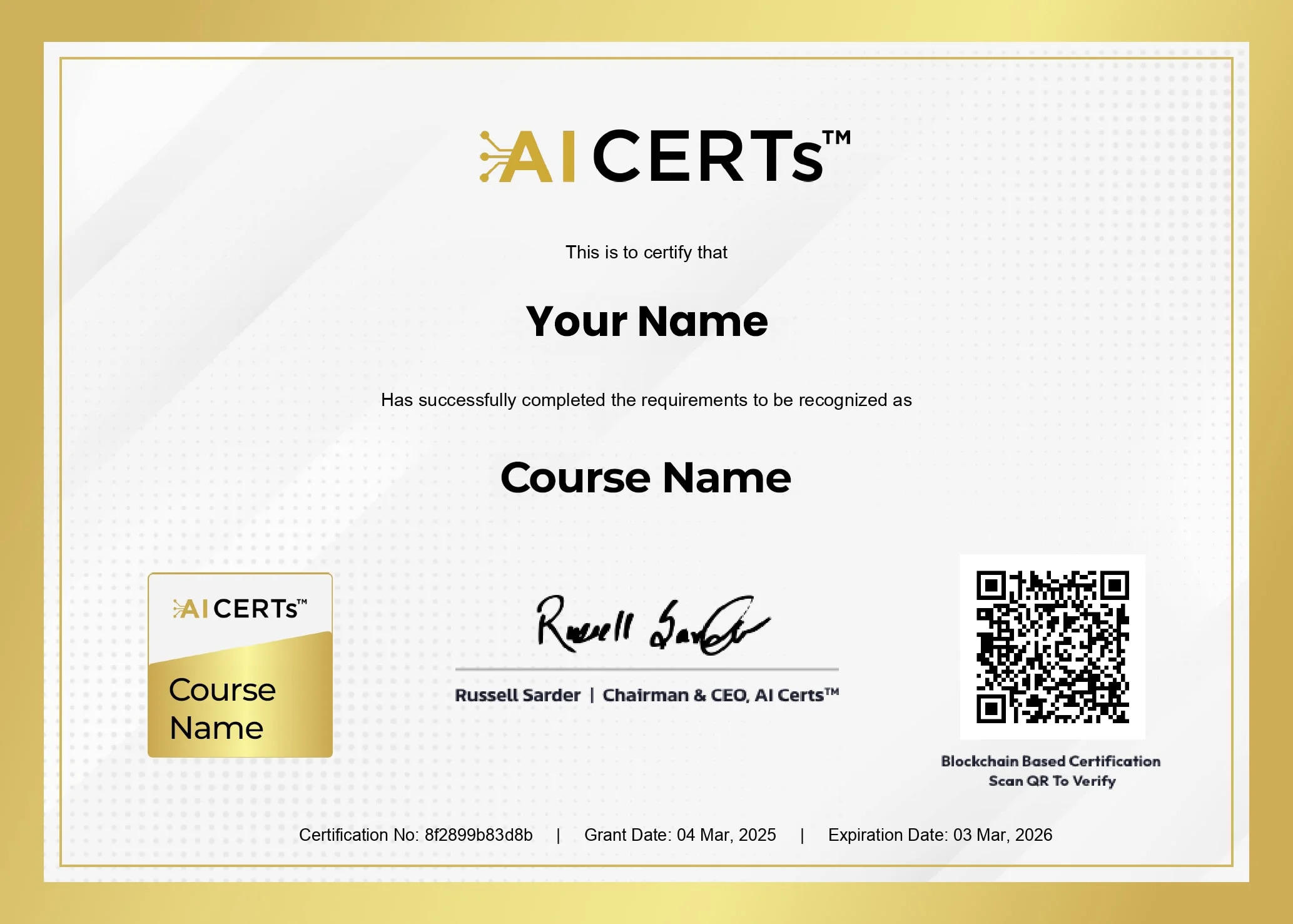
““There are no mandatory prerequisites for certification. Certification is based solely on performance in the examination. However, candidates may choose to prepare through self-study or optional training offered by AI CERTs Authorized Training Partners (ATPs).
Learners will gain expertise in using AI algorithms for detecting various cybersecurity threats, including email threats, malware, and network anomalies, enhancing security monitoring capabilities.
Students who will go through this course will have the ability to apply machine learning techniques to predict, detect, and respond to cyber threats effectively, using data-driven insights.
Learners will develop skills in implementing advanced AI-based user authentication systems, improving security protocols to verify user identities more accurately and resist fraudulent attempts.
Students will learn how to use AI tools to automate and enhance penetration testing processes, identifying vulnerabilities more efficiently and comprehensively than traditional methods.

Secures AI systems against vulnerabilities, implements security protocols, conducts risk assessments, and ensures compliance with security standards.
Analyzes threats to AI infrastructure, monitors security breaches, develops defensive strategies, and responds to cybersecurity incidents effectively.
Protects data within AI environments, designs secure data storage solutions, encrypts sensitive information, and manages data access controls.
Gathers and analyzes intelligence on AI-targeted threats, predicts cyber-attacks, informs security strategies, and enhances organizational resilience.
““There are no mandatory prerequisites for certification. Certification is based solely on performance in the examination. However, candidates may choose to prepare through self-study or optional training offered by AI CERTs Authorized Training Partners (ATPs).
70%
50 multiple-choice/multiple-response questions
| Introduction to Artificial Intelligence (AI) and Cyber Security | 8% |
| Python Programming for AI and Cyber Security Professionals | 10% |
| Application of Machine Learning in Cyber Security | 10% |
| Detection of Email Threats with Artificial Intelligence (AI) | 11% |
| Artificial Intelligence (AI) Algorithm for Malware Threat Detection | 11% |
| Network Anomaly Detection using Artificial Intelligence (AI) Techniques | 11% |
| User Authentication Security with Artificial Intelligence (AI) | 11% |
| Generative Adversarial Network (GAN) for Cyber Security | 11% |
| Penetration Testing with Artificial Intelligence | 11% |
| Capstone Project | 6% |

CrowdStrike

Microsoft Cognitive Toolkit (CNTK)

Flair.ai